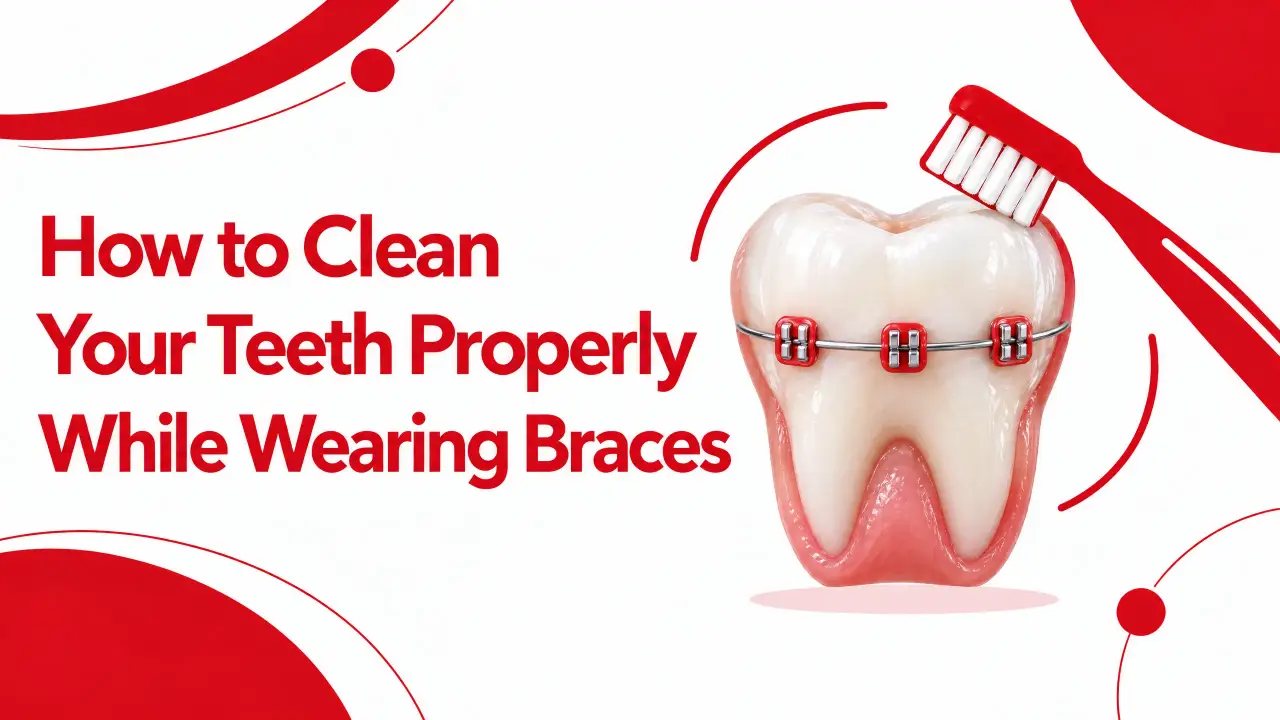
Wearing braces can help straighten your teeth and improve your bite, but keeping your teeth clean during treatment requires extra attention. Food particles can easily become trapped around brackets and wires, making brushing and flossing more challenging than usual. If these areas are not cleaned properly, plaque can build up and increase the risk of cavities, gum inflammation and white spots on your teeth.
Learning how to clean your teeth properly while wearing braces is an important part of protecting your oral health throughout orthodontic treatment. With the right tools, a consistent routine and regular dental check-ups, you can keep your teeth and gums healthy while working towards a straighter smile.
Whether you have recently started wearing braces or have been undergoing treatment for several months, these practical tips can make your daily oral hygiene routine easier.
Why Is Oral Hygiene Important When Wearing Braces?
Braces consist of brackets attached to your teeth and wires that help move them into the desired position. Although these components support tooth alignment, they also create small spaces where food debris and plaque can collect.
Plaque is a sticky film of bacteria that forms naturally on teeth. When it is not removed regularly, it can contribute to tooth decay and gum disease. Areas around orthodontic brackets can be particularly difficult to clean because the brackets and wires can obstruct your toothbrush.
Poor oral hygiene during orthodontic treatment may lead to several problems, including:
- Tooth decay: Plaque bacteria produce acids that can damage tooth enamel.
- White spots on teeth: Early enamel damage may leave permanent chalky marks around brackets.
- Gum inflammation: Plaque around the gumline can cause redness, swelling and bleeding.
- Bad breath: Trapped food particles and bacterial buildup may contribute to unpleasant breath.
- Treatment complications: Dental problems may require additional appointments and affect the treatment process.
A consistent cleaning routine helps reduce these risks and supports healthier results when your braces are removed.
1. Brush Your Teeth After Meals Whenever Possible
Brushing is one of the most important parts of cleaning teeth with braces. Food can collect around brackets and underneath wires after eating, so removing debris regularly is essential.
Use a soft-bristled toothbrush and fluoride toothpaste. Brush gently rather than applying excessive pressure, as aggressive brushing can irritate your gums and wear down the toothbrush bristles.
Follow these steps:
- Rinse your mouth with water to loosen food particles.
- Hold your toothbrush at an angle towards the gumline.
- Clean above each bracket, then brush below it to reach the areas around the wire.
- Brush the chewing surfaces and the inside surfaces of your teeth.
- Pay attention to the gumline and back teeth, where plaque can accumulate.
- Brush for at least two minutes, making sure you cover every area.
If you cannot brush immediately after eating, rinse your mouth thoroughly with water and brush when you can. Aim to brush at least twice daily, including before bedtime.
An electric toothbrush with a suitable soft brush head may also help, provided it is used correctly.
2. Use an Interdental Brush to Clean Around Brackets
A regular toothbrush may not reach every narrow space around braces. An interdental brush, sometimes called an interproximal brush, can help remove food and plaque around brackets and underneath orthodontic wires.
These small brushes are particularly useful when you notice food caught between the wire and your teeth.
To use one safely:
- Choose a size that fits comfortably without forcing it into a gap.
- Gently move the brush around the sides of each bracket and beneath the wire.
- Clean between teeth where the spaces allow the brush to pass easily.
- Rinse the brush after use and replace it when the bristles become worn.
Never force an interdental brush into a tight space. If it does not fit comfortably, ask your dentist or orthodontist to recommend the appropriate size.
Using an interdental brush alongside regular brushing can help you reach areas that are otherwise easy to miss.
3. Floss Daily Even When You Have Braces
Flossing can feel difficult when you have braces, but it remains important because a toothbrush cannot effectively clean every surface between your teeth.
Traditional floss can be used with a floss threader, which helps guide the floss beneath the orthodontic wire. Orthodontic flossers and other specially designed flossing products may make the process more convenient.
Here is how to floss with braces:
- Carefully guide the floss underneath the wire using a floss threader, if needed.
- Move the floss gently between two teeth without snapping it against your gums.
- Curve the floss around one tooth and move it gently up and down.
- Repeat against the neighbouring tooth surface.
- Remove the floss carefully and continue with the remaining teeth.
Try to floss once daily, preferably before bedtime. Take your time, particularly when you are learning the technique.
If flossing is uncomfortable or difficult, ask your dental professional to demonstrate a method suited to your braces. A water flosser may be a useful additional tool, but it should not automatically replace all other recommended cleaning methods.
4. Choose the Right Toothpaste and Mouthwash
The products you use can make a difference to your oral hygiene routine during orthodontic treatment.
Fluoride toothpaste helps strengthen tooth enamel and reduce the risk of cavities. Brush with a toothpaste containing fluoride unless your dental professional has recommended a different product for your individual needs.
A fluoride mouthwash may also be recommended for people who have difficulty cleaning around brackets or are at increased risk of tooth decay. Use it according to the product instructions and your dentist's advice.
Avoid using mouthwash as a substitute for brushing and flossing. It cannot reliably remove plaque and food debris trapped around braces.
If you use a fluoride mouthwash, follow its instructions about when to rinse. Rinsing with water immediately after brushing may wash away some of the concentrated fluoride left by toothpaste.
Your dentist can advise whether additional fluoride protection is appropriate for you.
5. Watch What You Eat to Protect Your Braces
Cleaning your teeth becomes easier when you reduce the amount of food that gets trapped around your brackets and wires. Some foods can also damage braces, leading to unexpected visits to the orthodontist.
Hard, sticky and chewy foods are common concerns during treatment.
Try to avoid or limit:
- Hard sweets and ice cubes that can damage brackets.
- Sticky toffees and chewing gum that may cling to orthodontic appliances.
- Very hard or crunchy foods that place excessive pressure on brackets.
- Chewy sweets that are difficult to remove from wires.
- Sugary snacks and drinks consumed frequently throughout the day.
You can still enjoy a varied diet by choosing braces-friendly alternatives. Cut firm fruits and vegetables into smaller pieces instead of biting directly into them. Softer foods, dairy products, eggs and appropriately prepared vegetables can be easier to eat.
Drink water regularly, especially after meals. Water helps rinse away loose food particles and is a better everyday choice than sugary or acidic drinks.
Reducing frequent sugar exposure is particularly important because plaque bacteria use sugars to produce acids that can damage enamel.
6. Check Your Teeth and Braces Every Day
After brushing, take a moment to inspect your teeth in a mirror. Look for food around brackets, plaque near the gumline and areas that still feel unclean.
Pay attention to any changes in your gums. Redness, swelling or bleeding during brushing can indicate inflammation, although other causes are possible. Persistent symptoms should be assessed by a dental professional.
Also check your braces for loose brackets, bent wires or anything that feels different from normal. Do not try to bend or adjust orthodontic wires yourself.
If a wire is irritating your cheek or a bracket becomes loose, contact your orthodontic clinic for advice. Orthodontic wax may provide temporary protection from irritation when used as directed, but it does not repair the appliance.
Regular appointments are important because your orthodontist can assess tooth movement, check your braces and identify problems that may not be obvious at home.
7. Maintain Regular Dental and Orthodontic Visits
Orthodontic appointments and routine dental check-ups serve different purposes. Your orthodontist monitors your braces and treatment progress, while routine dental examinations help assess your overall oral health.
Professional cleaning may be recommended depending on your oral hygiene needs. Your dental team can also identify plaque buildup, early enamel changes and gum problems before they become more serious.
Do not wait until your braces are removed to address a cavity or gum concern. If you notice persistent pain, swelling, bleeding or unusual marks on your teeth, arrange an assessment.
If you are looking for aDental Clinic in Sharjah, contact Al Dhaman Medical Centre to enquire about its available dental services and whether it can help with your oral health needs during orthodontic treatment.
Common Mistakes to Avoid When Cleaning Teeth With Braces
Even people who brush regularly can miss important areas around orthodontic appliances.
Avoid these common mistakes:
- Brushing too quickly: Rushing can leave plaque around brackets and along the gumline.
- Skipping flossing: The spaces between teeth remain vulnerable to plaque buildup.
- Using too much pressure: Hard brushing can irritate the gums and damage toothbrush bristles.
- Ignoring trapped food: Food left around braces can contribute to plaque accumulation and unpleasant breath.
- Relying only on mouthwash: Mouthwash does not replace mechanical cleaning.
- Missing dental appointments: Regular professional monitoring helps identify potential problems early.
Developing a consistent routine is more useful than brushing aggressively or relying on a single cleaning product.
Frequently Asked Questions
How many times should I brush my teeth with braces?
Brush at least twice a day for two minutes, including before bedtime. Cleaning after meals is also helpful because food can become trapped around brackets and wires.
Can I use an electric toothbrush with braces?
Yes. A suitable electric toothbrush can help remove plaque around orthodontic appliances. Usea soft brush head, follow the manufacturer's instructions and clean all surfaces carefully.
Is a water flosser enough when wearing braces?
A water flosser can help dislodge food debris and support your oral hygiene routine. However, the best cleaning approach depends on your needs. Your dentist may recommend combining it with interdental brushes or other flossing methods.
Why do my gums bleed when I brush with braces?
Bleeding can occur when plaque causes gum inflammation. Brush gently but thoroughly and clean between your teeth. If the bleeding persists, becomes heavy or is accompanied by swelling or pain, consult your dentist.
Can braces cause permanent white spots on teeth?
White spots can develop when plaque remains around brackets and minerals are lost from the enamel. These marks may persist after braces are removed. Good oral hygiene and appropriate fluoride use help reduce the risk, so speak to your dentist if you notice chalky white areas.



SHARE THIS PAGE!